D-Type Rubber Fenders,
Compact Contact Protection
Not every berth takes a ship. Jetties, pontoons, marina walls, tug landings, and loading bays need forgiving contact protection in a compact profile, and that is the D-type fender's territory. We extrude and mold D-section fendering to your dimensions, in continuous lengths or cut pieces.
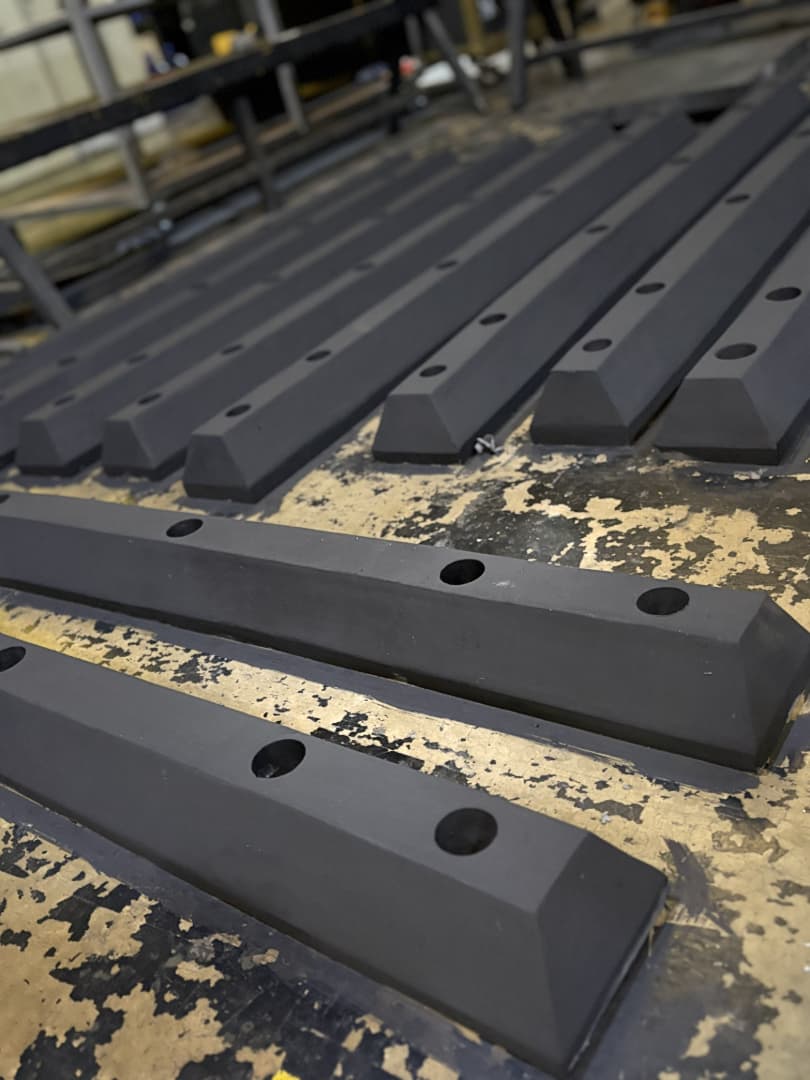
Why D-Type Rubber Fenders From Us
The D-profile is a half-round face over a flat base: a simple shape that cushions contact, distributes it along the wall, and bolts or bonds in place without hardware. It is the fender of choice where vessels are light, space is tight, or the need is continuous protection along a face rather than engineered energy absorption at a point.
Beyond the water, the same profile protects loading docks, haulage bays, and workboat landings from repeated knocks. We keep D-section tooling across the common sizes and cut custom lengths to order, including drilled bases for through-bolting and pre-formed corners for wraps around wall ends.
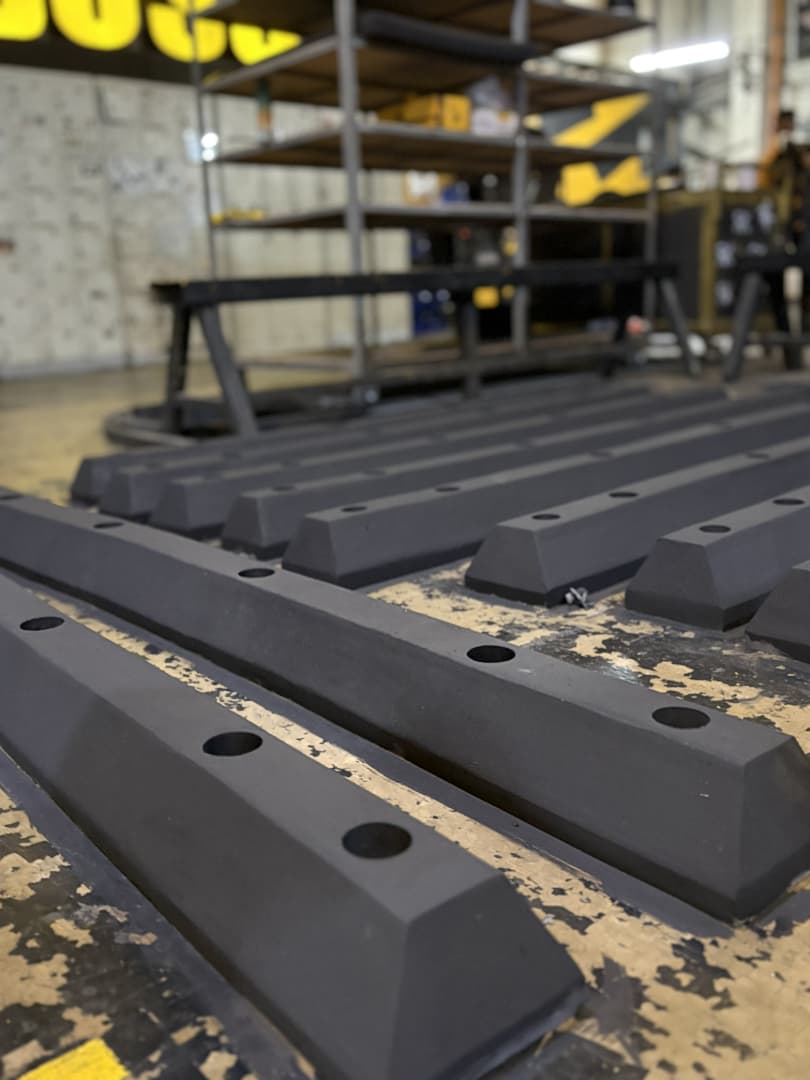
- Compact half-round profile for continuous contact protection
- Bolt-on, bond-on, and drilled-base mounting options
- Continuous lengths or cut pieces to your measurement
- Pre-formed corners and wrapped sections for wall ends and edges
Where D-Type Rubber Fenders Earn Their Keep
01
Marina Berths & Pontoons
Forgiving edges along floating and fixed berths where yachts and light craft tie up.
02
Tug & Workboat Landings
Hard-wearing contact strips where working boats nudge alongside all day.
03
Jetty Approach Walls
Protection along guide walls and approach faces that vessels rub rather than strike.
04
Loading Docks & Bays
Bumper strips absorbing the daily contact of trucks, trolleys, and docked vehicles.
05
Pile & Column Wraps
D-section formed around vertical members to cushion contact at any water level.
The Right Compound, Not Just Any Rubber
Every material below is stocked and formulated for D-type fenders. Not sure which fits? Describe the application and our engineers will match it for you.
Marine-Grade Rubber
Saltwater-immersion compound for continuous exposure at the waterline.
EPDM
Sun and weather resistance for above-water runs that live in full exposure.
SBR Compounds
Economical sections for loading bays and sheltered industrial contact duty.
Neoprene
Where fuel and oil contact around working vessels rules out general-purpose rubber.
Custom Options
- Section size to match the contact energy, from marina to workboat duty
- Cut lengths or continuous runs to cover the full face
- Drilled bases, slots, or bond-ready backs for your mounting
- Pre-formed corners and radius pieces for wall ends
- Color options where visibility or appearance matters
From Requirement to Delivered D-Type Rubber Fenders
Send Your Details
Share a drawing, CAD file, dimensions, or the part itself. Worn or damaged samples are routine input for our engineers.
Compound & Quote
We match the elastomer to your application's demands and quote your exact quantity, small batch or full production.
Sample Approval
For new custom parts, you approve a production sample first. What you approve is what ships.
Production & Delivery
Manufactured in-house on production presses, then shipped from Manila, Singapore, or Europe to your site.
Often Ordered Together
D-Type Rubber Fenders, Answered
When is a D-type fender the right choice?
When the need is continuous light-contact protection along a face rather than high-energy absorption at a berthing point. Small craft, guide walls, and loading bays are its home ground; engineered berths for larger vessels move up to arch profiles.
How is D-section fendering installed?
Typically bolted through the flat base into the wall or structure, bonded with adhesive on smooth faces, or strapped around piles. Tell us the mounting surface and we will supply the sections drilled, slotted, or plain accordingly.
Can you form the fender around corners and curves?
Yes. Wall ends, corners, and pile wraps take pre-formed pieces made to the radius of the turn, which protects the edge far better than a mitered joint cut on site.
What sizes of D-section do you carry?
A range covering marina duty through workboat and dock use, and sections outside it can be run to order. Give us the face width you want to protect and the contact energy it sees, and we will match the section.
We only need enough fendering for one wall. Is that acceptable?
Single-face and repair orders are welcome. Measure the run you need covered and we will cut and drill to it.single-face and repair orders
How quickly can D-type fendering be supplied?
D-section runs are among our fastest fender products to produce, and rush handling can compress the schedule further when a berth or bay is waiting. State the need-by date in your request.
Get D-Type Rubber Fenders Made to Your Spec
Send a drawing, sample, or just a description of what you need. Our engineering team will match the compound and quote your exact quantity, with rush production if the deadline demands it.