Bridge Bearing Pads,
Laminated for the Long Span
A bridge lives in motion: traffic loads, thermal expansion, girder rotation. The laminated bearing pad is the joint that lets all of it happen while carrying the structure's full load. We manufacture bridge bearings to your project specification and reproduce replacements for spans already in service.
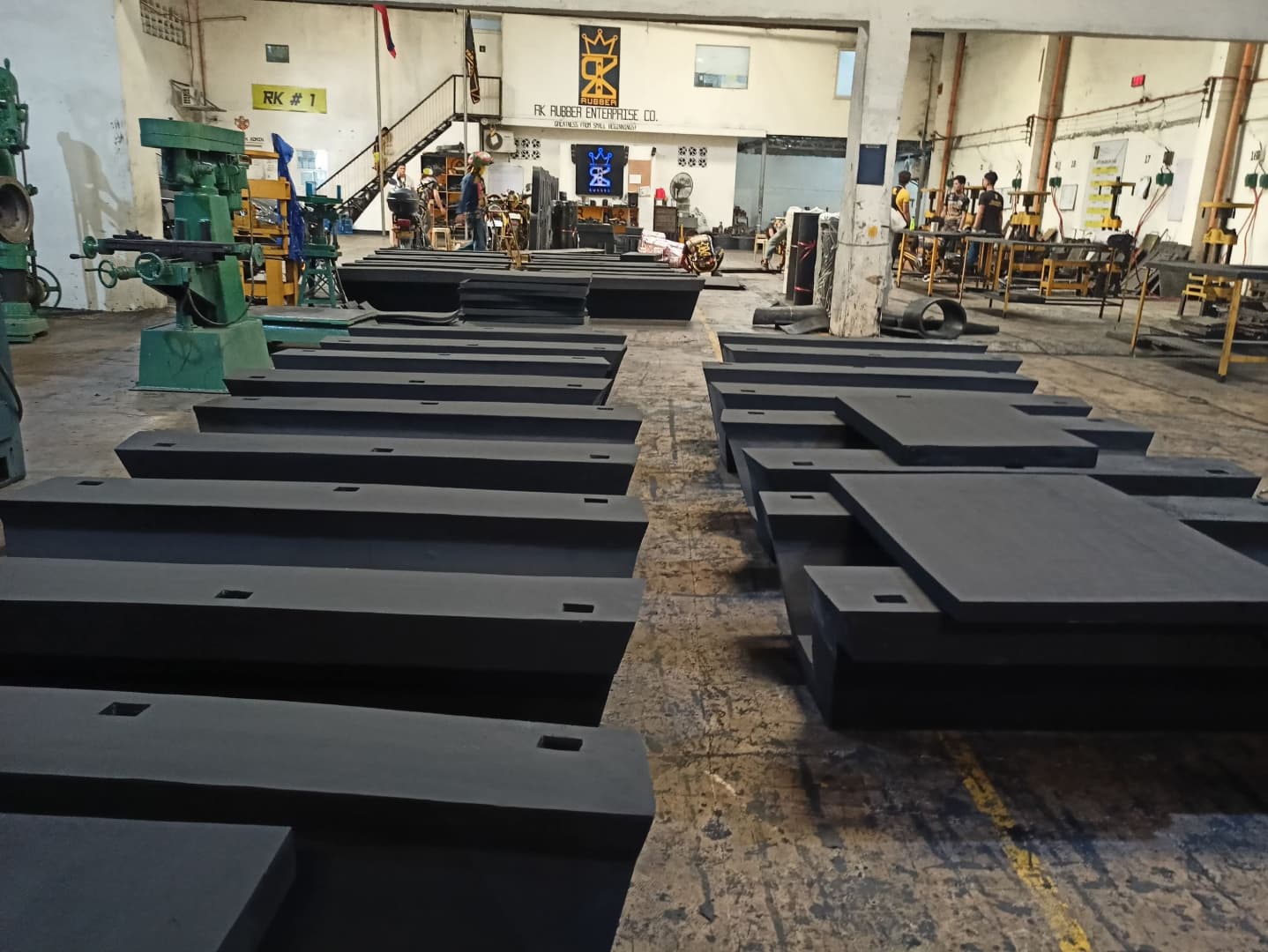
Why Bridge Bearing Pads From Us
Bridge bearings do three jobs at once under permanent load: transfer vertical force from the deck to the substructure, permit the rotations the girder makes under traffic and temperature, and allow the horizontal movements that thermal cycling demands. Steel plates laminated between rubber layers give the bearing the vertical stiffness to carry the deck while the rubber layers retain the flexibility those movements need.
We build these bearings to project specification, layer by layer, and test them for the performance a bridge inspector expects. For rehabilitation contracts, we also reverse-engineer bearings from the units coming off the bridge, matching envelope dimensions and anchor arrangements so the replacement drops into the existing seat.
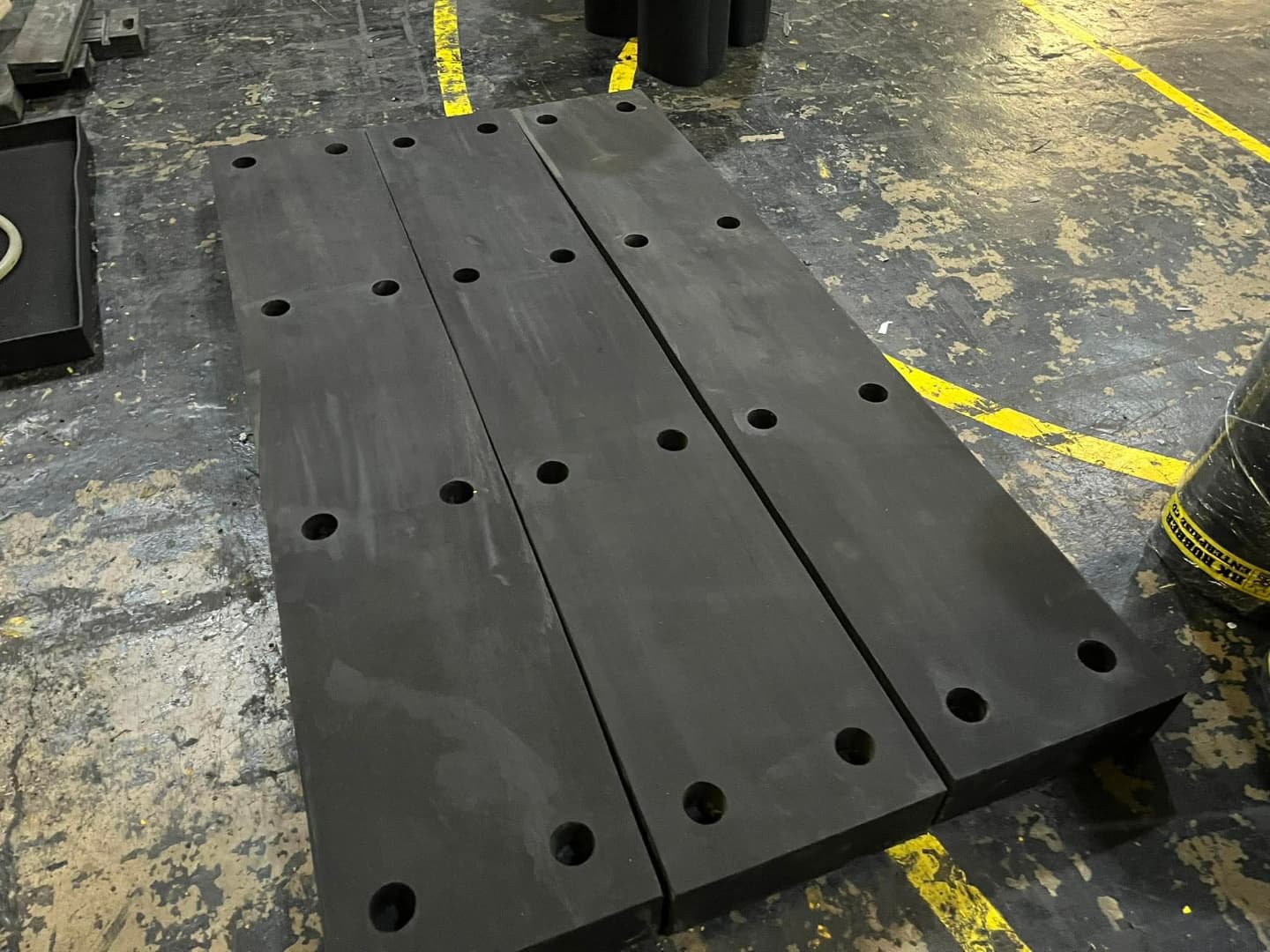
- Steel-laminated construction for high vertical load with rotational flexibility
- Manufactured to project drawings: plan size, layer count, and anchorage to spec
- Replacements matched to existing bearing seats and anchor layouts
- Supplied for new construction, widening, and rehabilitation contracts
Where Bridge Bearing Pads Earn Their Keep
01
Girder Bearings
Bearing seats under steel and prestressed girders where deck load meets pier and abutment.
02
Deck Expansion Support
Bearing points along deck runs that must move with thermal cycling without shedding load.
03
Bridge Rehabilitation
Replacement bearings for aging spans, matched to existing seats when original drawings are gone.
04
Footbridges & Flyovers
Smaller laminated bearings tuned to lighter decks with the same movement demands.
05
Rail Bridges
Bearings specified for the dynamic, cyclical loading that rail traffic imposes.
The Right Compound, Not Just Any Rubber
Every material below is stocked and formulated for bridge bearings. Not sure which fits? Describe the application and our engineers will match it for you.
Neoprene
The standard bridge-bearing elastomer, proven in laminated construction with strong weather and ozone resistance.
Natural Rubber
Chosen where maximum flexibility and low temperature stiffening resistance are specified by design.
EPDM
Specified for exposed installations in aggressive, sun-heavy environments.
Steel Laminates
Bonded shim plates that provide vertical stiffness while rubber layers flex.
Custom Options
- Plan dimensions and total thickness to your project drawing
- Internal construction matched to the specified stiffness and movement
- Anchorage and sole-plate arrangements coordinated with your substructure
- Replacement bearings reverse-engineered from units off the bridge
- Marking and documentation for project QA records
From Requirement to Delivered Bridge Bearing Pads
Send Your Details
Share a drawing, CAD file, dimensions, or the part itself. Worn or damaged samples are routine input for our engineers.
Compound & Quote
We match the elastomer to your application's demands and quote your exact quantity, small batch or full production.
Sample Approval
For new custom parts, you approve a production sample first. What you approve is what ships.
Production & Delivery
Manufactured in-house on production presses, then shipped from Manila, Singapore, or Europe to your site.
Often Ordered Together
Bridge Bearing Pads, Answered
What does a laminated bridge bearing do that a plain pad cannot?
Lamination lets one component be stiff vertically and flexible horizontally at the same time. The steel plates stop the rubber from bulging under deck load, while the rubber layers between them still rotate and shear as the bridge moves. A plain pad spreads load well but cannot carry heavy bridge loads at the thicknesses movement requires.
Can you supply bearings for an old bridge with no available drawings?
Frequently, yes. Send one of the bearings being removed, or careful measurements with photos of the seat and anchor arrangement, and we will reproduce the replacement. Matching the existing seat matters most on rehabilitation jobs.
How do I specify a bridge bearing for a new project?
Provide the drawing with plan size, total thickness, and the design load and movement ranges. If the design is still developing, our engineers will work through the bearing selection with your structural team rather than waiting for a finished package.
Do you supply bearings for small bridges and footbridges?
We do. Lighter decks use smaller laminated sections, and we manufacture across the range. A footbridge bearing gets the same laminated construction and compound discipline as a highway girder bearing, just scaled to the load.
What quantities do you supply for a bridge project?
Everything from a full bearing set for a new crossing down to a handful of replacements for a single-span repair. Quote the pieces your contract actually needs.
Our rehab schedule slipped. Can bearings be produced quickly?
Rush manufacturing is available when a closure or possession window is fixed and waiting is not an option. State the date in your quote request and we will confirm feasibility before you commit.
Get Bridge Bearing Pads Made to Your Spec
Send a drawing, sample, or just a description of what you need. Our engineering team will match the compound and quote your exact quantity, with rush production if the deadline demands it.