What Is an Elastomeric Bearing Pad?
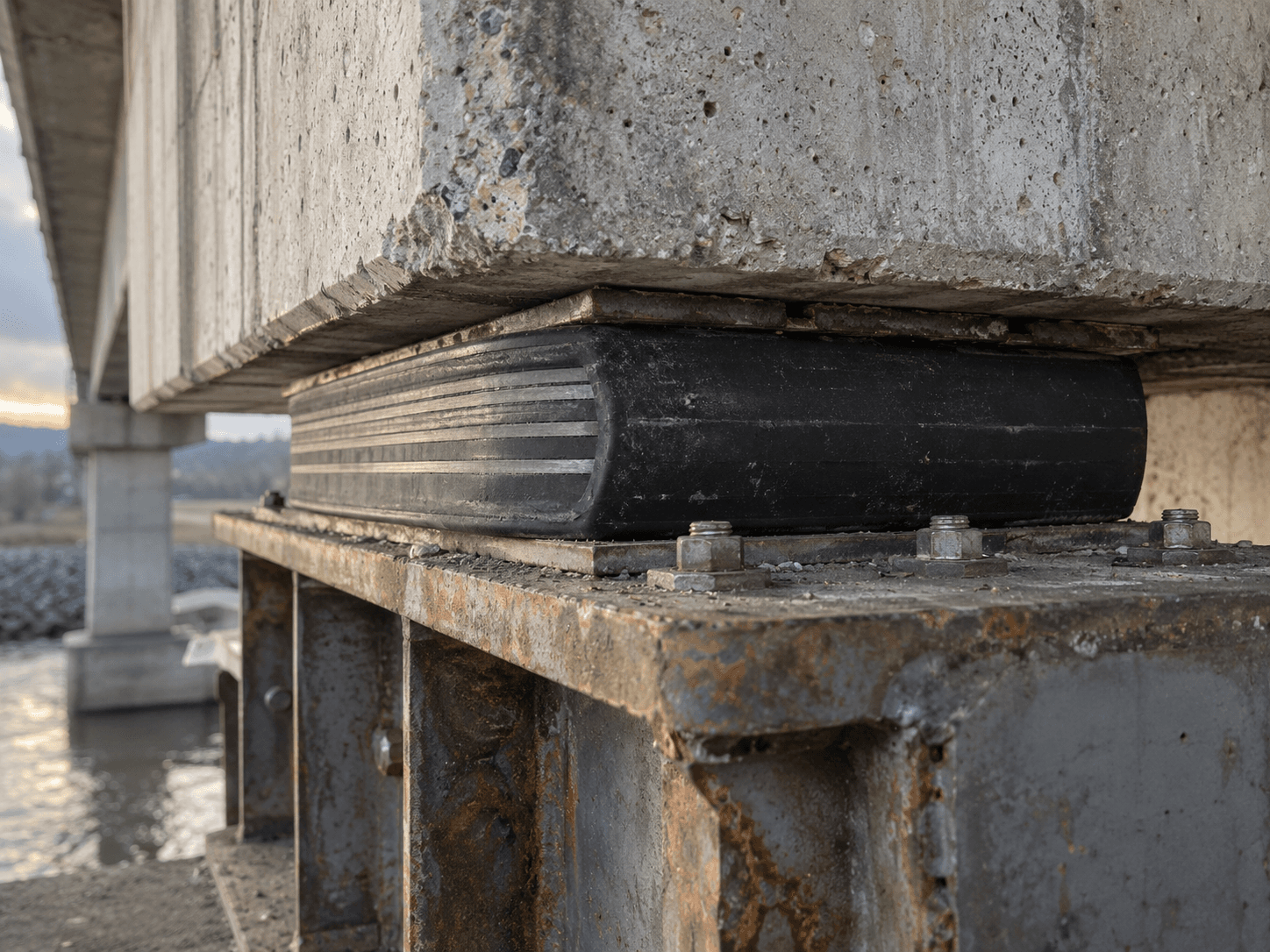
An elastomeric bearing pad is a molded rubber element that sits between a structure's superstructure and its substructure. Bridges and buildings both move: spans expand in heat, contract in cold, and deflect under traffic. The pad's job is to hold the vertical load while letting that movement happen without cracking concrete or crushing bearing seats.
Most pads are molded from neoprene or natural rubber, with quality highway work specifying virgin polymer compound that meets state DOT requirements. Buyers can choose plain pads, fabric-reinforced pads, fiber-reinforced pads, or fully laminated pads built up with internal steel shims. Some designs add a bonded PTFE sliding surface for long travel distances. The right choice depends on temperature exposure, seismic demands, and how the compound ages in the installed environment.
How the Pads Handle Load
A bearing pad handles load by spreading concentrated weight from the superstructure across a broader area of the substructure. Without it, the reaction concentrates on a small patch of concrete, which is how cracking, spalling, and edge damage develop at beam seats. The pad turns a point load into uniform bearing stress it can carry for years.
How much vertical force a pad can support depends on its material, thickness, and reinforcement. Plain neoprene and natural rubber pads suit lighter-duty applications. Steel-reinforced bearings carry heavier vertical and shear loads because the internal shims restrain the rubber from bulging outward under pressure. Fabric- and fiber-reinforced pads sit in between, adding compressive strength and damping for jobs a plain pad cannot quite cover.
Movement and Rotation, the Other Half of the Job
Bridge spans expand in heat and contract in cold, and the pad absorbs that movement by shearing horizontally in its own plane. The structure moves on its support without dragging damaging stress into piers and girders. For slide-bearing assemblies, a PTFE-bonded face lowers friction so the span travels smoothly across its support plate.
Rotation is handled through deflection. When a girder end rotates under live load, the pad compresses more on one side and bulges slightly at its edges, converting the angle into controlled vertical shortening rather than damaging shear. Reinforcing shims restrain that bulge, which is how stiffness and rotation capacity are tuned. Engineers verify the combination with compression and bulge analysis so the pad supports the structure without overstress.
Materials and Types of Bearing Pads
Neoprene and natural rubber form the foundation of most pads. Neoprene suits highway and bridge work because it resists weather, ozone, and heat. Natural rubber remains a dependable choice where environmental exposure is less demanding. Either way, the compound determines how the pad performs over decades, so aging behavior matters as much as initial hardness.
- Neoprene for outdoor, ozone-exposed, and warmer service conditions
- Natural rubber where exposure is milder and flexibility is the priority
- Virgin-polymer compound where state DOT qualification documents are required
When a plain pad cannot handle the compression, vibration, or lateral forces on the job, reinforced configurations take over. Steel shims raise load capacity by limiting bulge while preserving rotation. Preformed fabric-reinforced pads and random-fiber types add compressive strength and damping for heavy or high-vibration locations. Custom assemblies can be vulcanized to steel sole or masonry plates, including tapered top plates for sloped spans.
Where a structure must accommodate deliberate, long-travel movement, PTFE and steel options extend the standard pad's limits. A slide bearing bonds neoprene to a PTFE surface over a steel laminate, letting the supported member slide predictably while still carrying load. Sliding faces need basic care: keep them clean and inspect wear, alignment, and restraint hardware periodically.
Where Elastomeric Bearing Pads Are Used
Bearing pads sit beneath precast concrete and steel beams in bridges, parking garages, and buildings, and they are a standard item in bridge rehabilitation work. Industrial sites use them too: petrochemical plants, power stations, and forging operations rely on rubber pads to carry loads while damping vibration and reducing noise. PTFE-faced slide assemblies serve long thermal travel, and the same flexibility supports seismic isolation strategies by allowing controlled displacement.
Specifying, Inspecting, and Ordering
Start a specification by defining the bearing type, the required material grade, and the hardness that matches the load and movement profile, so suppliers can match state DOT requirements. Request test data and full material traceability with the quote. On delivery, check dimensions, plate flatness, and the condition of any vulcanized steel bonds, and fold those checks into the maintenance inspection plan so defects are caught early in service.
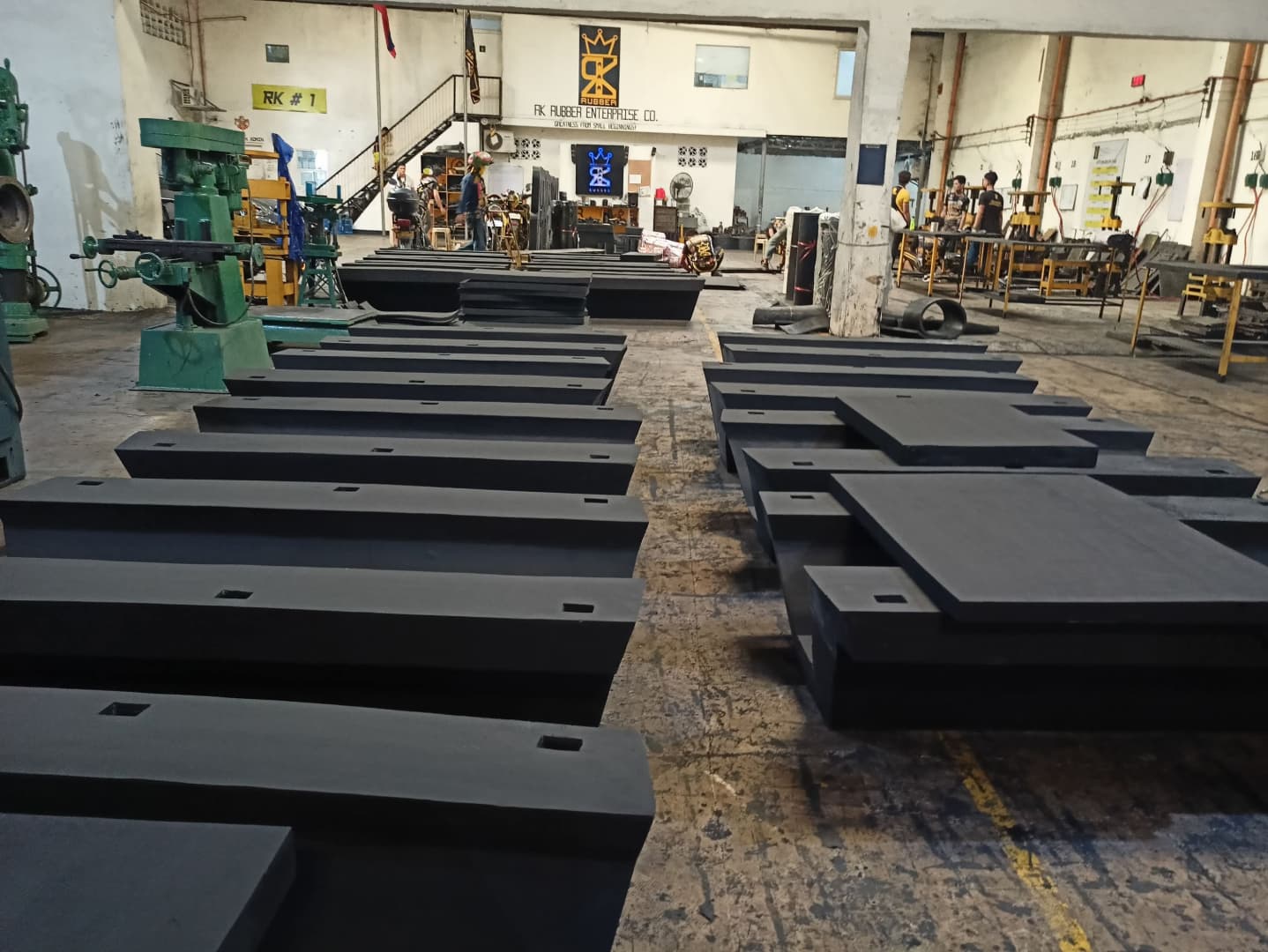
United RK Rubber manufactures elastomeric bearing pads in plain, reinforced, and steel-laminated configurations, molded and cured by the same engineering team that helps you size them. Low minimum orders make single-structure projects practical, and rush production is available when a bearing replacement is holding up a bridge or a plant. Send the loads, the movement range, and any existing pad samples, and the team will confirm the right build.