It Is a Trade-Off, Not a Ranking
The bushing argument usually arrives as "which is better," and it starts from the wrong premise. Rubber and polyurethane solve different halves of the same problem. A bushing exists to locate a moving part, carry load, and control how much vibration and shock reach the machine frame. Rubber does the damping half brilliantly. Polyurethane does the durability half brilliantly. The machine, not a forum thread, decides which half matters more.
In practice the question lands on a maintenance planner's desk as a worn bushing on the bench. Before replacing like-for-like out of habit, it is worth asking what actually killed the old one: was it vibration fatigue, abrasion, chemical attack, heat, or plain overload? The failure mode is the specification.
What Each Material Does Best
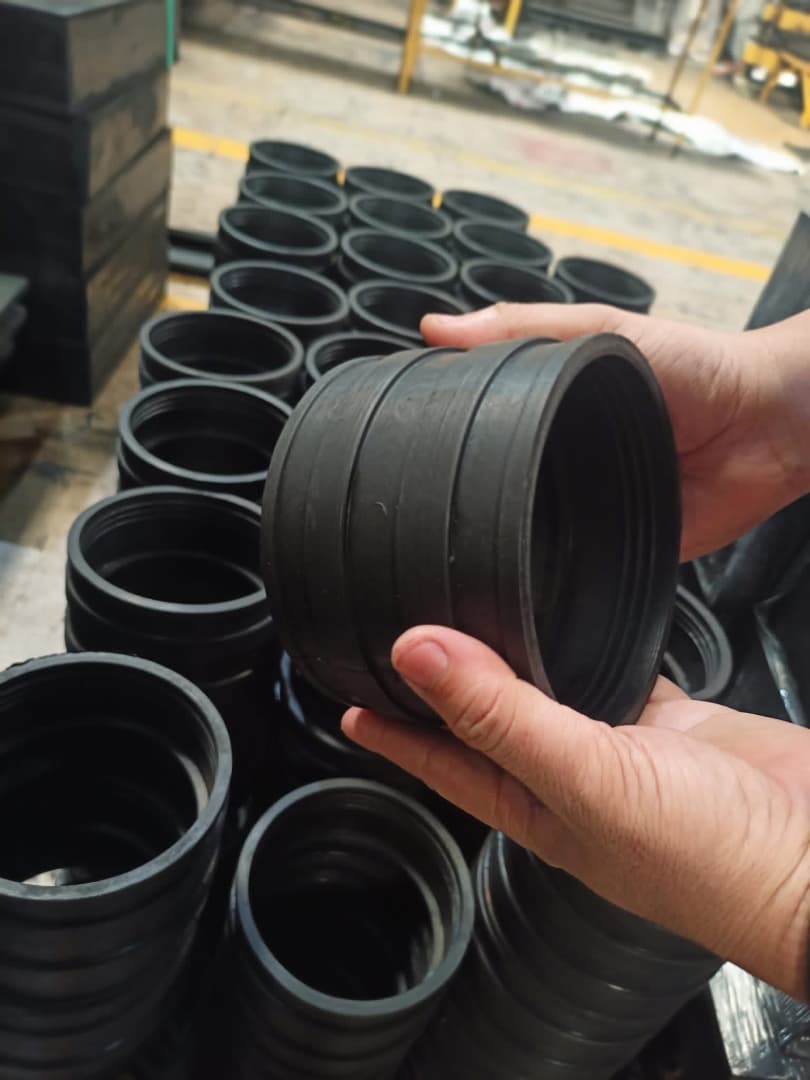
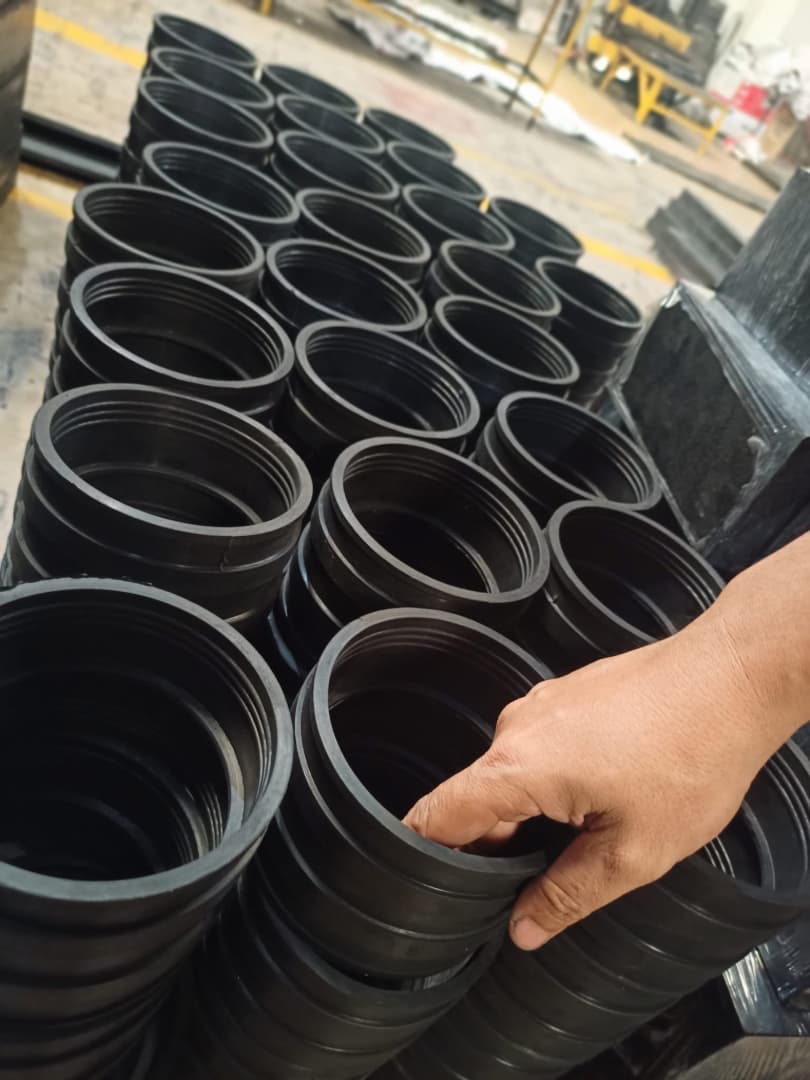
Rubber bushings compress and flex under load, absorbing operational movement before it reaches the frame. That elasticity is what makes them the natural choice for vibration isolation and structure-borne noise: presses, mounts, and linkages run measurably quieter on well-chosen rubber. Within rubber, the compound does the fine tuning: natural rubber for resilience, NBR where oil is present, EPDM for weather, and so on.
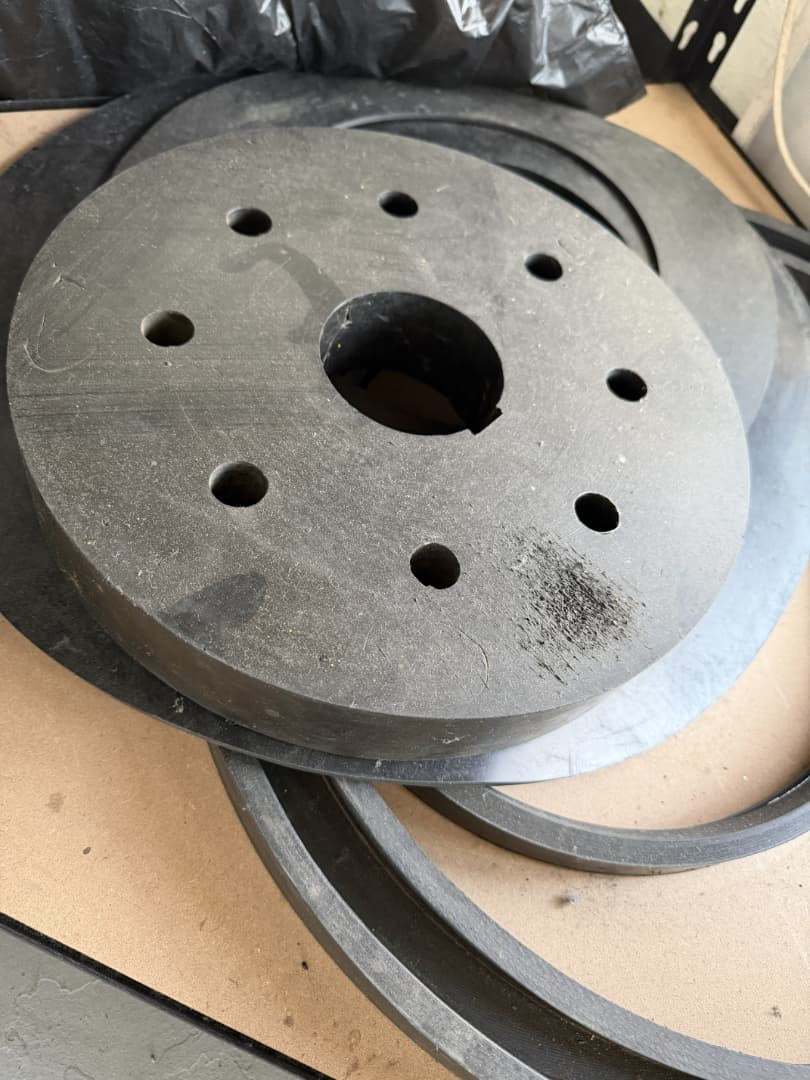
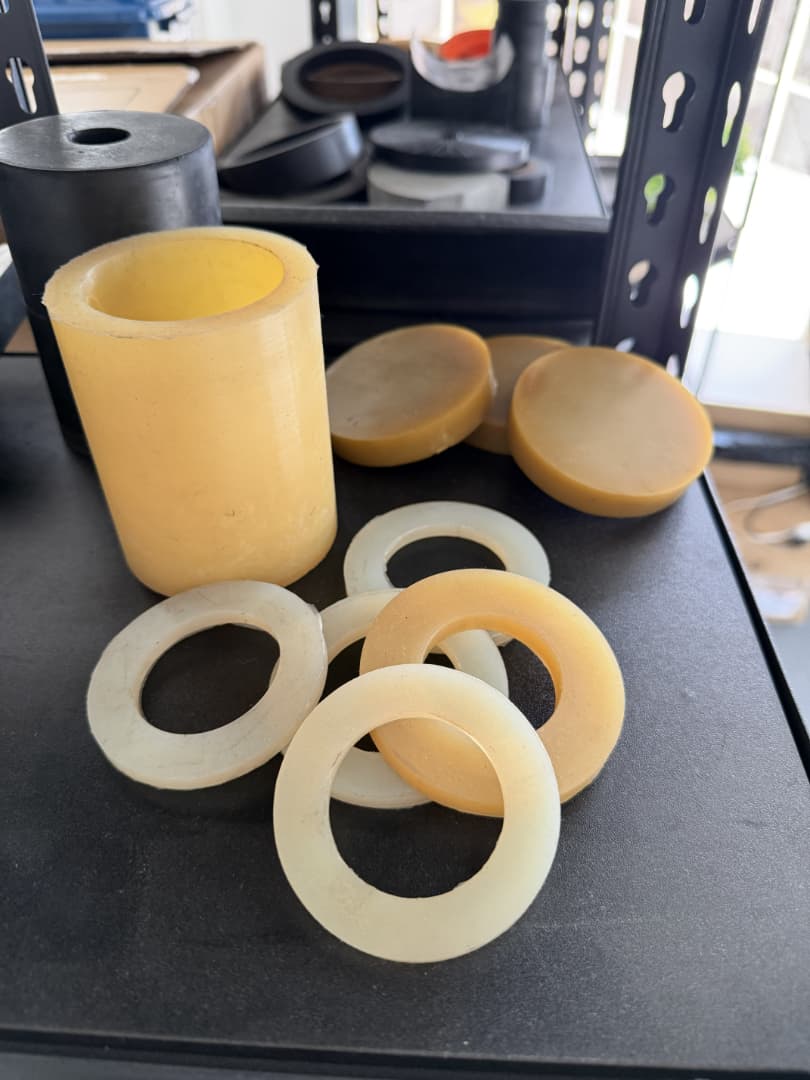
Polyurethane bushings resist wear instead. Their cross-linked structure holds shape under repeated movement, friction, abrasion, and impact, which is why they tend to win in high-cycle, heavy-load positions where rubber would simply chew through. The cost of that toughness is transmitted vibration: polyurethane is the stiffer partner, and the machine will feel it.
The Deciding Factors
Work down a short list and the answer usually falls out. Damping priority: if the complaint is noise, vibration, or cracked welds on the frame, rubber. Wear priority: if bushings are being replaced on a schedule measured in weeks, polyurethane. Load and position control: if the assembly must hold alignment under load, polyurethane's firmness wins; if it must flex, rubber does. Environment: match the compound or grade to the actual fluids, heat, and UV the bushing will see, because chemical incompatibility kills either material young.
Hardness is the final lever. In both families, softer grades isolate better and harder grades carry more but transmit more. On the Shore A scale the bushing's working hardness should follow the load and damping requirement, not the supplier's default stock.
Ordering Practicalities
Bushing replacement is one of the highest-value custom rubber parts to order well: the part is small, the tooling is modest, and the downtime it prevents is not. Give the supplier the full duty, not just the dimensions.
Before you request a bushing quote, have these ready:
- Bushing dimensions, or the worn part itself for measurement
- Load on the joint and whether it is static, rotating, or oscillating
- Vibration and noise complaint, if that is driving the change
- Environment: oils, chemicals, heat, and outdoor exposure
- The failure mode of the part being replaced, if known
The Next Step
Decide what the bushing is for, damping or durability, and let the machine answer. Plenty of assemblies genuinely need one of each in different positions, and that is a correct answer too.
United RK Rubber molds both rubber bushings and polyurethane wear parts in-house, with low minimum orders and rush production available. Send the drawing or the worn sample and we will recommend the compound for the duty.