The Core Difference
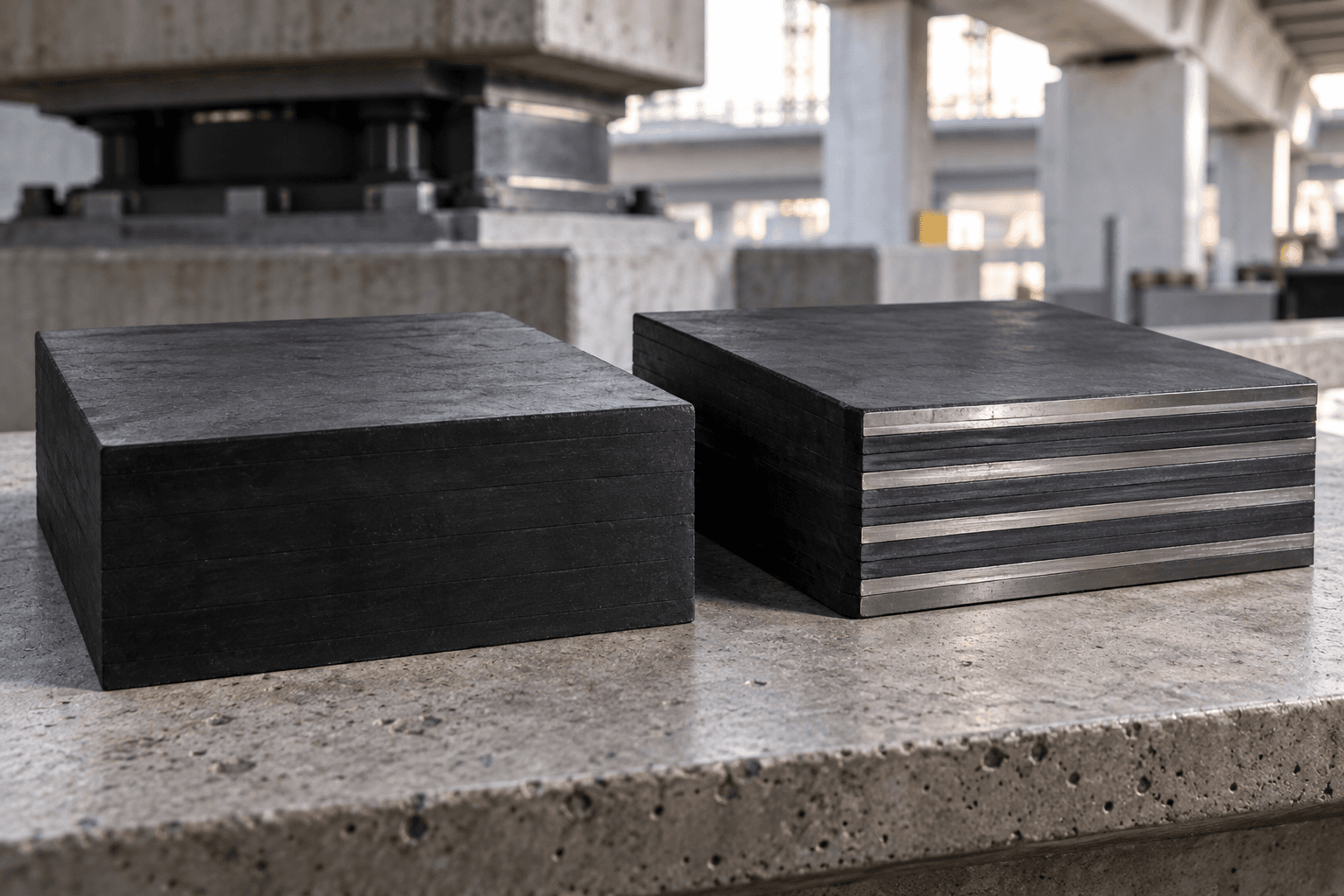
A plain elastomeric pad is solid rubber, usually neoprene, with nothing inside it. It is the economical choice for light-to-moderate vertical loads where shear flexibility, rotation capacity, and vibration damping matter more than raw capacity. Its simple construction also makes inspection straightforward during maintenance rounds.
A steel-laminated pad is built up from alternating layers of elastomer and vulcanized steel shims. The shims restrain the rubber from bulging under load, which raises vertical capacity and gives more controlled deformation under repetitive traffic. Hardness is chosen to balance flexibility and firmness: softer compounds flex more under movement, firmer ones hold their shape under load. That control is why laminated bearings dominate highway, railway, and heavy civil work.
Load Capacity and Vertical Stress
Vertical reaction usually governs pad selection, because average compressive stress has to stay within the elastomer's allowable limit. With plain neoprene pads, that ceiling sits at the level of routine light-to-moderate bridge service. The arithmetic is straightforward: divide the reaction by the allowable stress to get the plan area the pad needs, then check whether that area fits the bearing seat. Once reactions climb past what solid rubber can carry at a sensible size, the plain pad runs out of room.
Steel-laminated bearings solve that within the same footprint. The internal plates restrain elastomer bulging, which stiffens the bearing vertically and lets the designer use less plan area and thinner rubber layers for the same reaction. Designers describe this with the shape factor, the ratio of loaded area to the area free to bulge. Higher shape factor means stiffer behavior and more capacity, which is exactly what the shims buy: they divide the rubber into thin layers with a high effective shape factor without needing a large, thick pad.
Movement, Rotation, and Shear
Plain neoprene permits generous rotation and shear deformation, which is a genuine advantage on structures that move. The trade-off is that the total rubber thickness has to be generous too, or the pad can roll over and walk out of its seat under repeated cycling. Shear deformation that approaches a large share of the pad's total thickness is a warning sign in plain pads.
Because the shims restrain bulging, laminated bearings deliver the shear stiffness the design needs with less rubber, and they hold up better against delamination and fatigue. Temperature matters for both types: heat and cold shift the rubber's stiffness, so the compound is chosen for the service environment rather than a generic default. Fatigue limits deserve a check wherever movement repeats daily, such as live-load rotation under traffic.
Best Applications for Each Pad
Plain neoprene pads earn their place on small bridges, precast components, and machinery foundations with light-to-moderate loads, modest rotation, and limited thermal movement. They also suit projects where vibration damping and economy matter most, and where installation needs to be quick and simple. On precast beam jobs they are often the default because they tolerate the small rotations that come with beam camber and seating.
Steel-laminated pads belong on highway bridges, railway bridges, major viaducts, and other heavy civil structures. The shims limit bulging, raise compressive capacity, and keep deformation predictable under repetitive traffic. Laminated pads cost more up front, but on demanding applications they reduce performance risk over the life of the structure, which is usually the cheaper outcome.
A mixed approach is common on rehabilitation projects: piers that carry heavier reactions get laminated pads while lighter spans keep plain ones, matched to what each seat actually sees. What matters is that the choice is made per bearing, not per project, because reactions and movement differ from one pier to the next.
Choose by Load, Movement, and Project Needs
Match the pad to the structure's actual compressive load, shear movement, rotation, temperature exposure, and code requirements. For moderate loads and routine movement, a plain pad in a mid-range hardness does the job. As stiffness, heat resistance, or capacity requirements climb, step up to a firmer compound and then to steel-laminated bearings. Balance cost against long-term fatigue protection, and plan the installation: bearing weight, alignment, and handling all matter on site. Choosing by unit cost alone is the most common mistake, because the cheapest pad that fails a fatigue check costs far more to replace under traffic.
United RK Rubber manufactures both plain and steel-laminated elastomeric bearing pads, molded in-house with custom dimensions and reinforcement to match your loads. Low minimum orders keep smaller structures practical, and rush production is available when a bearing replacement is on the critical path. Send the reactions, movement range, and rotation demands, and the engineering team will confirm which build your structure actually needs.