How Marine Rubber Fenders Protect the Berth
A marine fender's job is simple to state and easy to get wrong: it receives a moving vessel, compresses, and converts the vessel's kinetic energy into elastic strain and a little heat before the hull can strike the quay. That controlled deformation is the berthing buffer between ship and structure. Without it, the shock load goes straight into concrete, steelwork, and hull plating.
How well a fender does this job depends on its shape as much as its rubber. D and cylindrical units suit compact applications, arch profiles serve workboat berths, cell and cone systems handle large vessels, W profiles protect tug contact points, and pneumatic or foam units float for offshore and high-tide work. Compound matters too: a quality marine compound with strong UV and saltwater resistance stays dependable outdoors for years where a generic rubber would harden and crack.
Start With Berthing Energy and Reaction Force
Every fender selection begins with the vessel's berthing energy, which comes from its mass and approach speed, adjusted for how it lands: tug-assisted or under its own power, head-on or at an angle. An engineer applies a safety margin to the calculated energy, then looks for fenders whose rated absorption meets or exceeds it at the intended deflection. Meeting the energy target alone is not enough. The fender's peak reaction force must also stay within the limits of both the quay structure and the hull.
Hull pressure is the check most often skipped. A fender can absorb the right energy at a safe reaction force and still dent plating because the contact area is too small. Facing panels spread the load, which is why cell and cone systems at heavy terminals are almost always supplied with panels.
- Choose rated absorption at or above calculated berthing energy, with a safety margin
- Confirm peak reaction force stays within quay and hull limits
- Spread the contact area with facing panels where hull plating needs protection
Match the Profile to the Vessel and the Berth
Vessel size and berth duty point to a fender family, but never rely on vessel length alone. Work out berthing energy from displacement and approach conditions first, then choose the profile. Mixed fleets can combine families, with D or arch profiles for small craft alongside cell or pneumatic units for larger vessels on the same structure.
Compact Berths: Cylindrical and D-Shaped Fenders
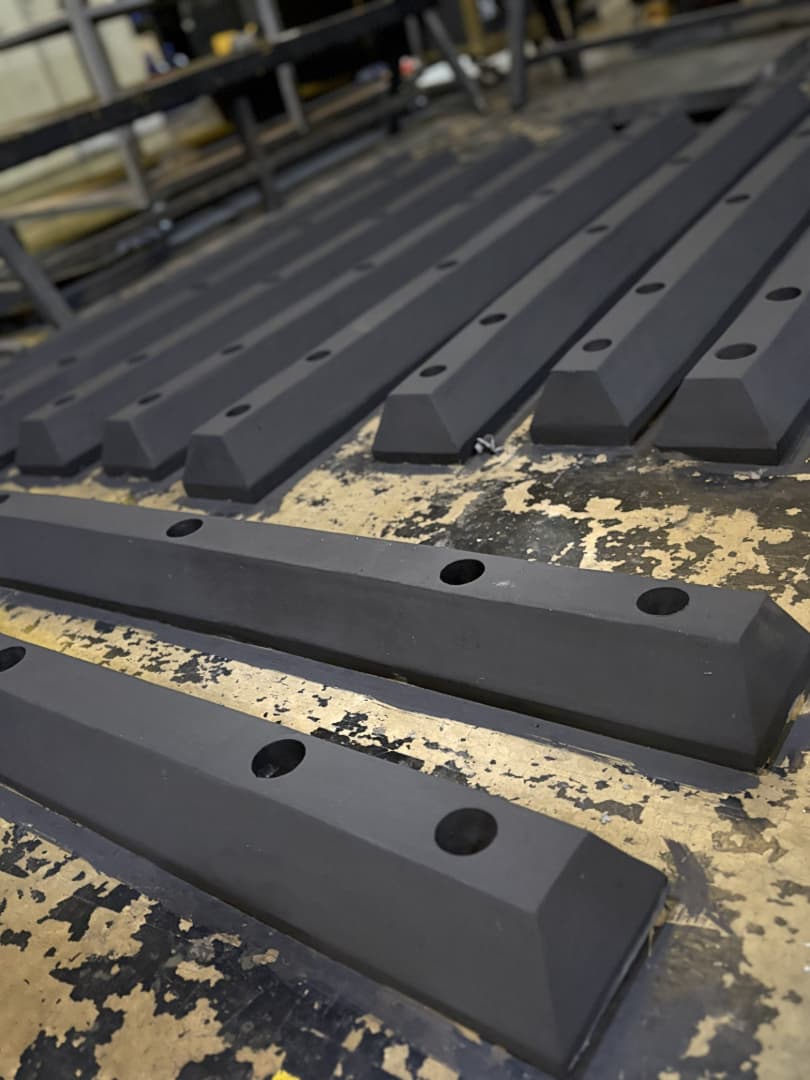
The two compact profiles differ mainly in how they mount. Cylindrical fenders are hollow and round, typically carried on roller brackets or backing frames so they can rotate under abrasive contact, and their hardware needs periodic inspection. D-type fenders have a flat rear surface that bolts directly to a vertical quay wall or clamps onto continuous rails, giving a clean, flush installation in tight berths.
Performance follows the same split. Choose cylindrical units when vessels roll, pitch, or arrive at changing angles: the curved profile spreads contact and lowers peak hull pressure during moderate, forgiving impacts. Choose D-shaped sections for tight marinas and bulkheads where a flush bolted face matters. Either way, size the profile so hull clearance survives the full tidal range, and check fasteners, wear, cracking, and compression set as part of routine maintenance.
Heavy and Specialized Berths: Arch, Cell, Cone, W, and Floating Units
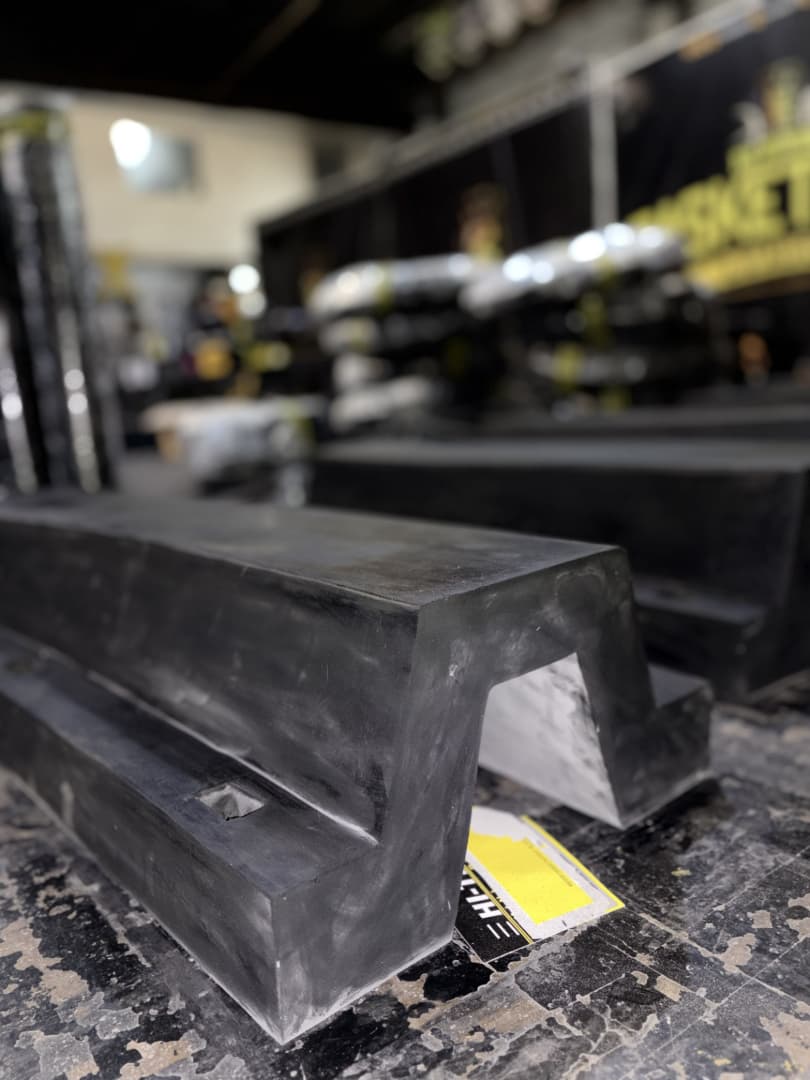
Arch fenders give more controlled absorption than basic D or cylindrical profiles. Their twin-leg shape holds a consistent reaction force across a broad deflection range, which suits berths with moderate tidal variation and frequent contact, and the design tolerates vessels that land and slide along the face.
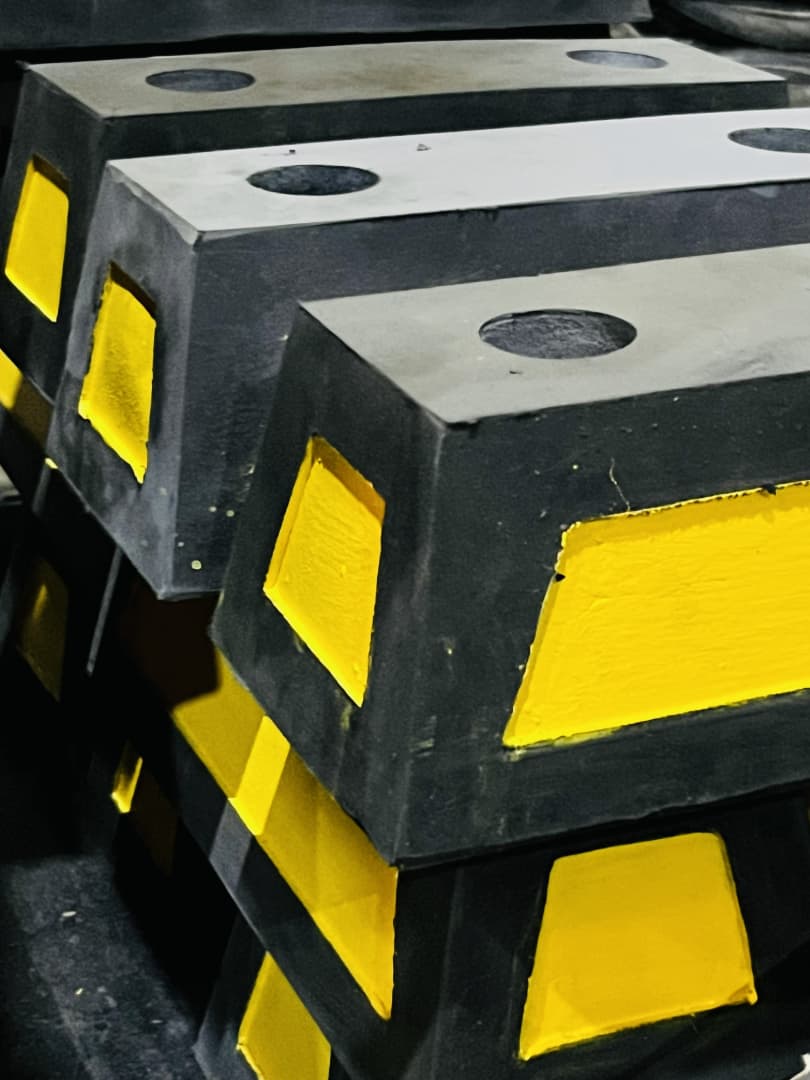
Cell and cone systems serve ferries, tankers, and large terminals where berthing energy is high. They absorb heavy impacts at large deflections while limiting the force transferred to the dock, almost always behind UHMW-PE or steel facing panels that keep hull pressure low. W-profiles go where tugs and barges make repeated contact at bows, sterns, and corners: the double-leg base and broad flat face spread pushing loads, deep grooves channel water and debris away from the contact face, and worn sections can be replaced without major structural work.
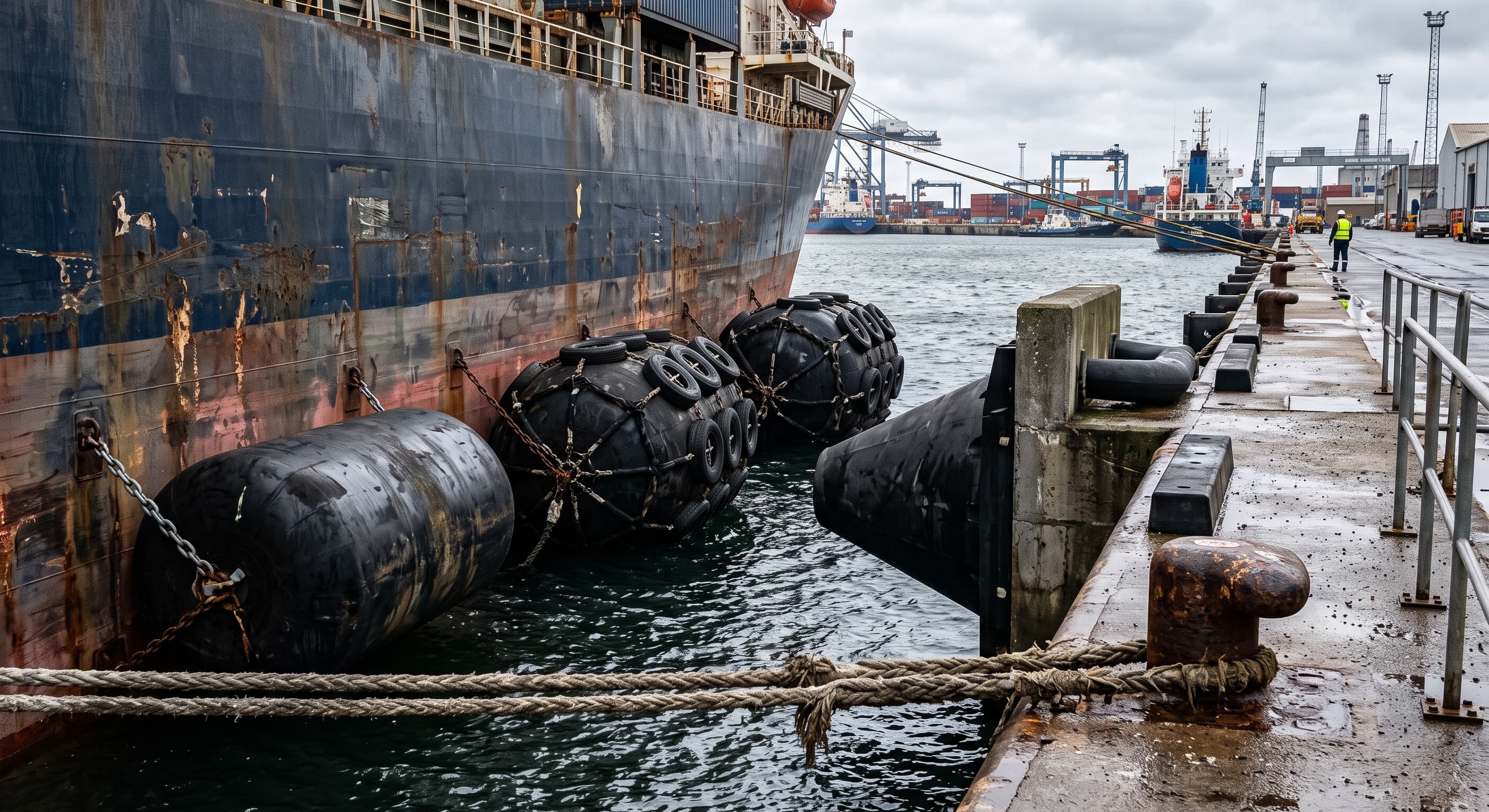
Pneumatic (Yokohama-style) and foam-filled fenders float, which makes them the answer for open-sea berthing, extreme tides, and large vessels. Pneumatic units absorb high energy at low reaction force, and their internal pressure can be tuned to the vessels using them, though they need inspections, pressure checks, and protective nets. Foam-filled units ask less of the maintenance schedule: their closed-cell core stays buoyant even after skin damage, which suits remote or permanent installations.
Choose for the Structure, Not Just the Ship
The right fender protects three things at once: the vessel, the quay, and the budget that pays for both. Match energy absorption and reaction force to the vessels and the structure, compare the profiles honestly, and a busy berth stays in service with far less repair work.
United RK Rubber manufactures arch and V-type fenders and D-type fender sections in custom profiles and lengths, and our team routinely reproduces hard-to-find legacy profiles from photos or a shipped sample, with low minimum orders for single-berth jobs.