What the Bumper Is Actually Protecting
Every backing trailer is a slow collision between tens of tons of steel and your building, and the bumper is the part standing between them. Sized and mounted correctly, it quietly absorbs that contact for years. Sized wrong, it either misses the trailer entirely and lets the dock face take the hit, or it shears off the wall and takes a chunk of concrete with it.
Selection comes down to four questions: how much traffic hits the dock, where the trailer actually strikes, how far the bumper must project to keep the trailer clear of the building, and whether the wall itself can hold the anchors. Answer those and the catalog page writes itself.
Match the Type to the Traffic
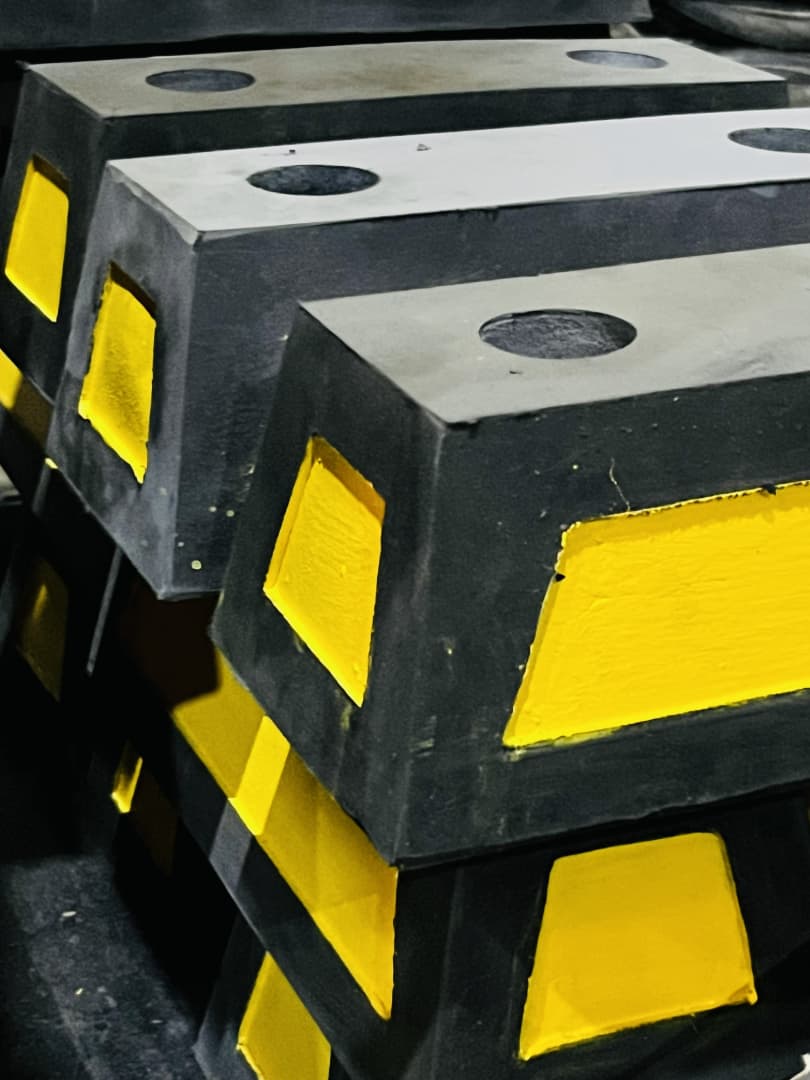
Bumper types sort cleanly by duty. Molded rubber bumpers suit light duty: delivery vans, occasional contact, low docks. Laminated bumpers, built from compressed recycled truck tires, are the standard for docks that see steady semi-trailer traffic, because the layered construction absorbs repeated backing impacts and holds up far longer under abuse. Where air-ride trailers land and reposition, or yard shunters back trailers all day, the surface takes a beating too, and a steel-faced laminated bumper protects the rubber face from being ground away.
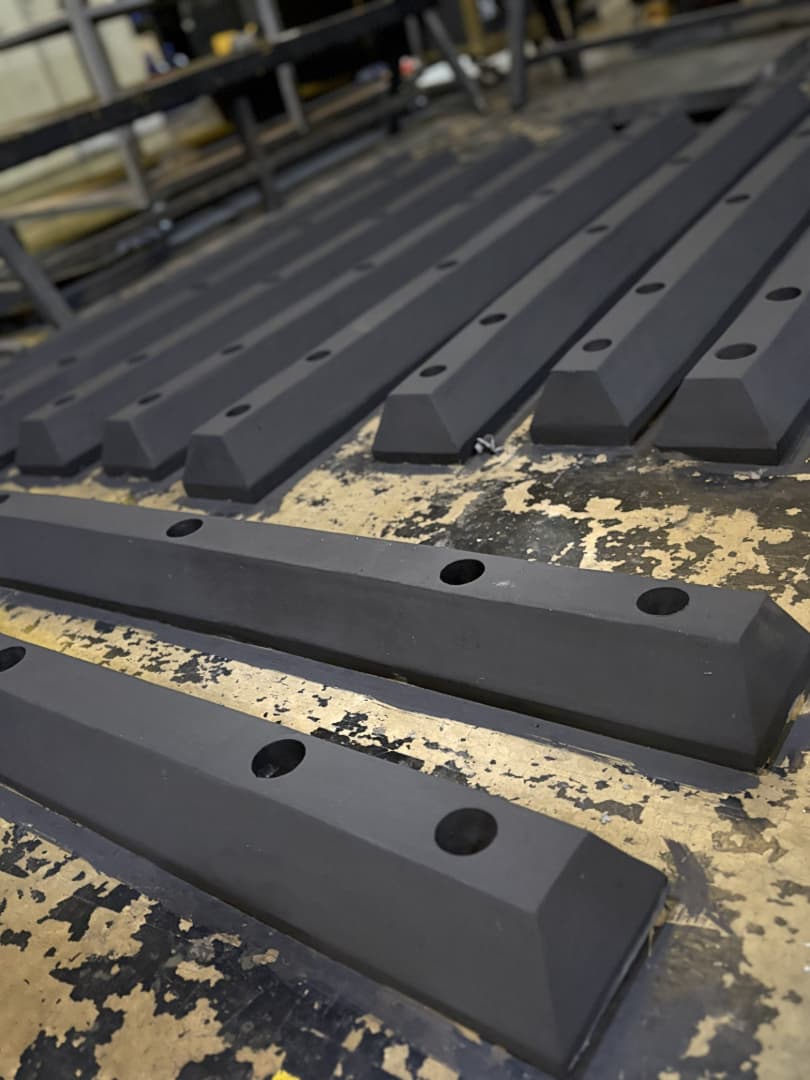
One type is often misapplied: extruded profile bumpers are excellent for interior walls, forklift pathways, and column protection inside the warehouse, but they are not built to stop a trailer. Outside on the dock face, use dock-rated product.
Size to the Fleet and the Dock
Height follows the strike zone. A dock that serves trucks of one consistent height can use a modest bumper aligned with the contact point. Mixed fleets, docks with levelers, and trailers raised on landing gear need taller vertical bumpers so contact always lands on rubber, and a centered horizontal bumper between the verticals covers the low-riders. The rule is simple: whatever arrives, it should hit the bumper, not the concrete.
Width and spacing cover the opening: bumpers should sit where the trailer actually contacts, with the arrangement matched to the door width and the widest trailers using the dock. On open docks, keep the gaps between bumpers small enough that a trailer cannot find unprotected wall between them.
Projection: the Dimension Everyone Forgets
Projection is how far the bumper face stands off the wall, and it exists to keep the trailer's rear frame clear of the building. A level approach needs only a standard projection, but a driveway that declines toward the dock lets the trailer's top edge swing closer to the wall, so sloped approaches need progressively more projection, roughly in proportion to the slope. Roof overhangs and canopy steel set their own limits on how much projection is possible.
Dock levelers add one more check: the leveler lip needs enough trailer penetration to seat properly, and an oversized projection can interfere with it. If the geometry gets tight, work the numbers before ordering, because a bumper that protects the wall but blocks the leveler is its own kind of downtime.
The Wall Decides the Anchoring
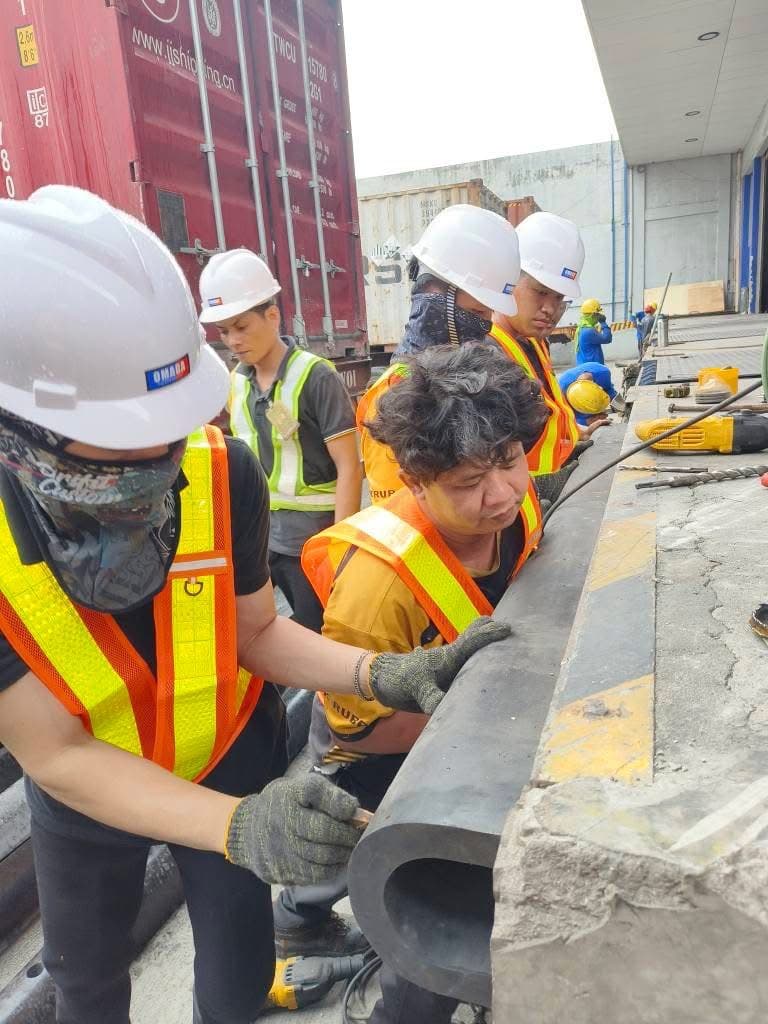
Before anything is drilled, identify the wall. Solid poured concrete takes deep anchors and is the ideal substrate. Hollow concrete block is not: its face shells are thin and will not carry repeated impact loads without reinforcement, and bumpers bolted straight into unreinforced block are the ones that end up on the pavement. For steel-faced bumpers on poured concrete, have a structural engineer confirm the wall capacity and specify the anchors.
Before you request a dock bumper quote, have these ready:
- Traffic: trailers per shift, and whether shunters reposition frequently
- Fleet heights: consistent or mixed, and any air-ride or raised trailers
- Dock details: opening width, approach slope, roof overhang, leveler type
- Wall construction: poured concrete, block, or other
- Existing bumpers: bolt-hole spacing for a drop-in replacement fit
The Next Step
Bumpers are consumable protection: they are meant to wear instead of the building. Inspect them on a schedule, replace them when they flatten, tear, or go loose at the anchors, and treat recurring anchor failures as a wall problem, not a bumper problem.
United RK Rubber manufactures molded and laminated dock bumpers to standard and custom sizes, with low minimum orders and rush production available when a dock is taking hits today. Send the dock details and the old bumper's dimensions, and we will confirm the right specification.