Define the Hose's Actual Job
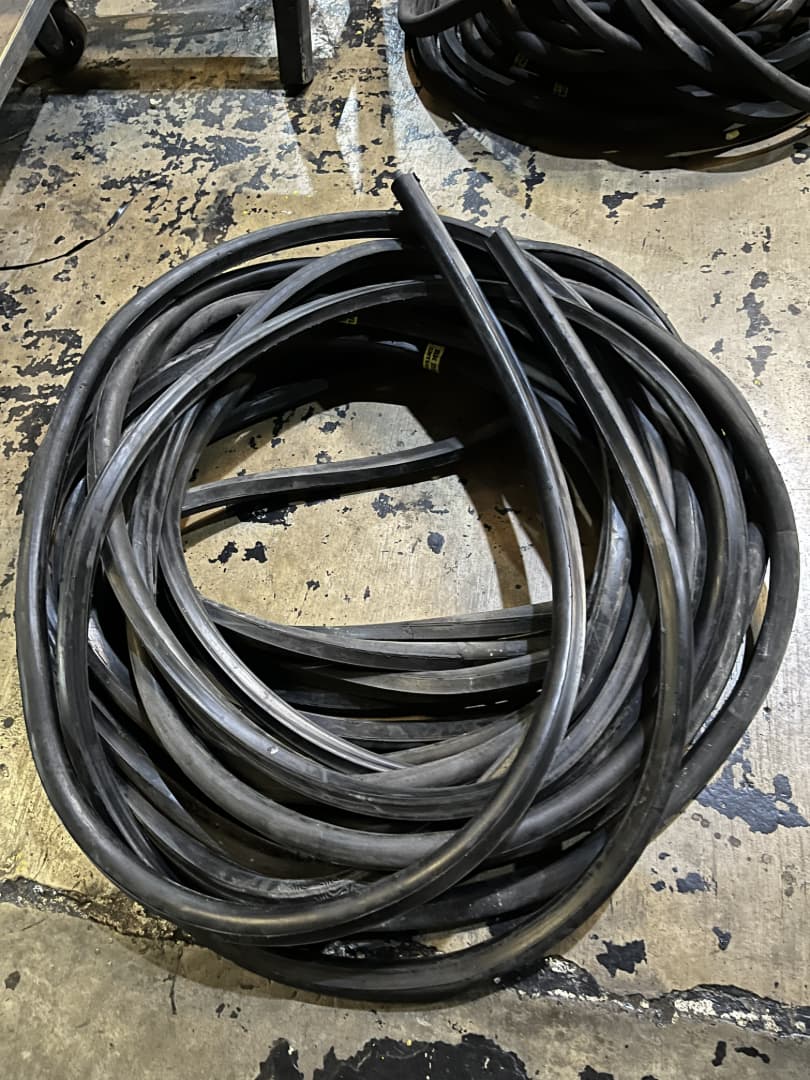
An industrial hose is asked to do four things at once: carry a fluid it must not react with, hold a pressure it must not burst under, bend through a route it must not kink in, and survive an environment that is often worse than the fluid inside it. Most hose failures come from ignoring one of those four. So start the selection by writing down the real conditions, not the nominal ones.
Record the normal and maximum working pressure, whether spikes or cycling occur, and any vacuum requirement. Note the fluid temperature and the ambient temperature, including extremes. List every fluid the hose will carry, including cleaning agents used between batches. Then describe the routing: static or moving, repeated bending, vibration, abrasion, and how tight the bends are. That document is the specification everything else is checked against.
Match the Tube Material to the Medium
The inner tube touches the fluid, so chemical compatibility decides the compound. An incompatible pairing makes the rubber swell, soften, harden, or shed into the product long before the reinforcement ever becomes the problem. The classic pairings are reliable starting points, but the specific fluid, its concentration, and its temperature must always be confirmed with the supplier.
For food, beverage, or pharmaceutical transfer, compatibility alone is not enough: the formulation must also meet the applicable cleanliness and regulatory requirements, and you should ask for that documentation with the quote.
Pressure Rating and Reinforcement
Choose a working-pressure rating at or above the system's maximum normal pressure, with headroom for the spikes and pressure cycling that real equipment produces. The reinforcement is what delivers that rating: textile braid or knit suits lower-pressure service and keeps the hose light and easy to route, while steel-wire braid or spiral construction carries the high-pressure hydraulic duty at the cost of weight and flexibility.
Two details finish the pressure picture. First, the whole assembly shares the rating of its weakest part, so fittings, couplings, and valves must all meet the same working pressure. Second, ratings are temperature-dependent; a hose that holds its rating at ambient conditions may not at sustained heat. Confirm both with the manufacturer's data for the specific product.
Diameter, Bend Radius, and the Cover
Size the inside diameter for the required flow, because an undersized hose chokes flow and burns pressure, while the outside diameter has to fit the fittings, clamps, and the physical space it routes through. Respect the minimum bend radius: forcing a tighter turn than the hose allows is how linings crack and hoses collapse, especially where the assembly moves or vibrates.
- Bend radius: never route tighter than the datasheet minimum, especially on moving equipment
- Flexing service: choose a construction rated for repeated flex, not just static pressure
- Cover: match it to abrasion, oil, chemicals, UV, ozone, and weather where the hose actually runs
- Fittings: the coupling material must be as chemically compatible as the tube
Ordering Practicalities
A hose inquiry that lists the fluid, the pressures, the route, and the environment gets an accurate answer in one pass. Anything vaguer turns into assumptions, and assumptions are what fail in service.
Before you request a hose quote, have these ready:
- Every fluid conveyed, including cleaners and flush media
- Normal and maximum working pressure, plus spikes, cycling, or vacuum
- Fluid and ambient temperatures, including extremes
- Routing details: length, bend radii, movement, vibration, abrasion
- End fittings required, and any regulatory or food-contact requirements
The Next Step
No single hose suits every job, and that is the point of doing the homework: the right tube, the right reinforcement, and the right cover for your exact conditions. Specified that way, a hose stops being a recurring maintenance item.
United RK Rubber supplies industrial rubber hose and assemblies matched to your medium and duty, with low minimum orders and rush production available. Send the fluid list and the operating conditions, and we will confirm the specification before anything is cut.