Start With the Floor, Not the Pattern
Most matting disappointments come from choosing a pattern first and the floor second. The three patterns you see on rubber matting rolls all provide grip, but they differ in how they grip, how they drain, and how they survive traffic. The right choice depends on what the floor has to handle: moisture, foot traffic, dropped loads, or wheels crossing it all day.
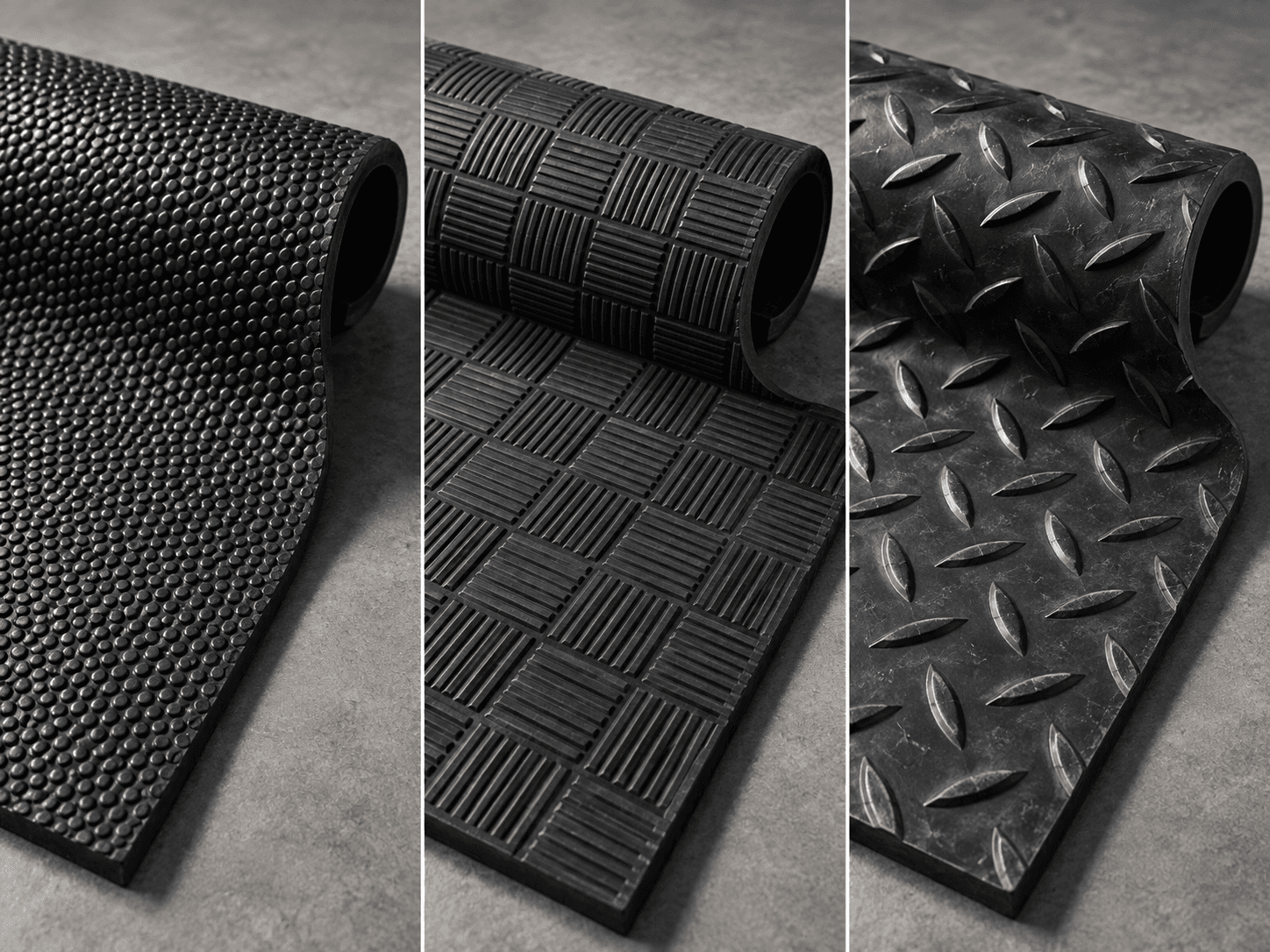
Anti-skid matting carries a dense, pebble-like texture with many small contact points. Checkered matting uses raised square or rectangular lugs in a directional block pattern. Diamond matting carries raised diamonds that grip in multiple directions and hide wear well. None of them is universally better; each earns its place in a different room.
How Each Pattern Grips
Surface pattern decides how a mat behaves when wet. Textured rubber outperforms smooth rubber the moment moisture or oil reaches the floor, because the raised elements give shoes and wheels something to bite into while the valleys channel liquid away. Rubber's natural friction and the pressed texture work together, which is why the same compound can feel safe or slippery depending on the pattern molded into it.
Choose diamond when people and carts approach from several directions. Checkered hides wear well and gives dependable walking traction, though its wet grip is less aggressive than diamond. Anti-skid pebble surfaces give shoes many contact points, shed moisture, and sweep clean with a broom.
Durability Under Heavy Traffic
Traction is only half the story. Heavy-use floors also demand a mat that resists compression, abrasion, and tearing over time. Where forklifts, carts, or heavy equipment cross regularly, use a thick solid rubber section with a diamond or heavy checker surface. The raised pattern spreads the load, which limits indentation and permanent flattening of the high points.
Pebble-pattern anti-skid matting in a quality natural rubber holds up well in wet, busy areas: the many contact points distribute wear instead of concentrating it on a few ribs. Thin mats and tiles wear faster under the same traffic, and smooth anti-fatigue rubber, while comfortable, develops wear patterns quickly under equipment and gets slippery when wet.
Matching the Pattern to the Space
In wet areas such as showers, kennels, and entryways, anti-skid pebble or diamond textures give non-directional grip, and a waterproof backing stops saturation and keeps the mat stable on the floor beneath. These mats hose down or mop clean in minutes. Rolls cover wider areas with fewer seams, which reduces the water pooling that happens at joints.
In gyms and garages, checkered and diamond matting protect the concrete underneath from tires, tools, and dropped equipment while improving grip underfoot. The multi-directional pattern matters in a gym, where people move laterally during drills and machine adjustments, and it matters in a garage, where water or oil eventually reaches the floor. Loose-lay mats suit flexibility; double-sided tape suits a permanent installation. Sweep debris promptly, clean spills with mild soap and water, and protect exposed edges so moisture and dirt do not collect underneath.
Rolls or Tiles: Coverage, Seams, and Budget
For forklift routes and continuously busy floors, heavy diamond or checkered rolls resist wear, support heavy loads, and create a nearly seamless surface. The trade-off: wide rolls may need adhesive or professional fitting, which adds installation cost. For small, irregular, or DIY spaces, interlocking tiles cost more per unit area but install without tools and let you replace a damaged section instead of the whole floor. Expect visible seams.
Material matters as much as format. Natural rubber with a raised diamond or pebble texture gives the most dependable grip in wet areas and the longest service life under traffic. Lighter-duty vinyl diamond plate or smooth-top mats cost less and clean easily, which can be the right trade for a light-use area. Compare expected lifespan and maintenance, not just the price per mat.
The Bottom Line
Choosing rubber matting comes down to where it goes and what crosses it. Anti-skid matting gives dependable grip in wet areas, checkered matting suits walkways, gyms, and everyday flooring, and diamond plate handles heavier industrial use. Compare traction, drainage, thickness, and maintenance honestly before you buy, and the floor stays safer and lasts longer.
United RK Rubber manufactures rubber matting in all three patterns, cut to size or supplied in long rolls, with low minimum orders and rush production available when a floor cannot wait.